High-Temperature Heat Pumps

Principle

A circular approach to industrial heat: recover energy that would otherwise be rejected, upgrade it efficiently and return it to the process.

Recovered energy

Waste heat

  • Cooling utilities & cooling towers
  • Process cooling
  • Humid air & flue gas condensation
  • Effluents & greywater
30 – 90°C
Efficient heat upgrade

Heatlift HTHP

  • Designed for industrial waste heat
  • High-efficiency turbocompressors
  • Maximized COP
  • Compact skid-mounted units
2 – 15 MWth
Useful energy

Process heat

  • SteamUp to 20 bar & 230°C
  • Hot airUp to 200°C
  • Hot waterUp to 210°C
  • Integrated processSteam
    Reboiler vapours
    Up to 200°C
Up to 230°C

How it works

The working fluid circulates in a closed loop. It absorbs waste heat at low pressure and is compressed to release useful heat at high temperature.

  1. 1
    Evaporation

    The refrigerant absorbs waste heat and evaporates at low pressure

  2. 2
    Compression

    High efficiency centrifugal compressors raise the fluide

  3. 3
    Heat production

    The working fluid condenses and generates high-temperature process heat

  4. 4
    Expansion

    The working fluid is expanded to low pressure

High-temperature heat pump cycle Evaporator, compressor, condenser and expansion valve connected in a closed refrigerant loop. EvaporatorWASTE HEAT IN CompressorPRESSURE & TEMPERATURE LIFT CondenserPROCESS HEAT OUT ExpansionPRESSURE REDUCTION 1 2 3 4
Working fluids

Selected for each temperature range, application and site constraints

  • Refrigerants
  • Alkanes

Heatlift works non-flammable refrigerants that facilitate site installation and with Alkanes (natural fluids). The fluid is selected according to the required temperature range, pressure levels, process and site integration constraints.

Coefficient of performance

COP measures how efficiently electricity is converted into useful process heat

COP = Useful heat delivered Electricity consumed

Lower temperature lift → higher potential COP. A smaller difference between the heat-source temperature and the useful-heat temperature reduces the compression work required.

Industrial performance first

Heatlift high-temperature and steam generating heat pumps combine emissions reduction with process integration benefits, stronger energy resilience and energy efficiency.

50–80%

Less energy consumption

By upgrading locally available waste heat instead of producing all process heat from primary energy, Heatlift systems can significantly reduce final energy consumption.

Up to 95%

Process decarbonisation

Replacing fossil-fuel heat generation with efficient electrification can sharply reduce process CO₂ emissions and support industrial decarbonisation roadmaps.

Waste heat valorisation and reduced cooling needs

Heat that would otherwise be rejected becomes a useful energy resource. Cooling duties are then reduced because part of the thermal load is converted into valuable process heat.

Reinforced energy sovereignty

Using local waste heat and electricity helps reduce dependence on imported fossil fuels, limits exposure to fuel-price volatility and strengthens long-term industrial resilience.

In-house high-performance centrifugal compressor

Heatlift designs and manufactures its own centrifugal compressors so the thermodynamic cycle, compressor aerodynamics, controls and process integration can be optimised to increase system COP.
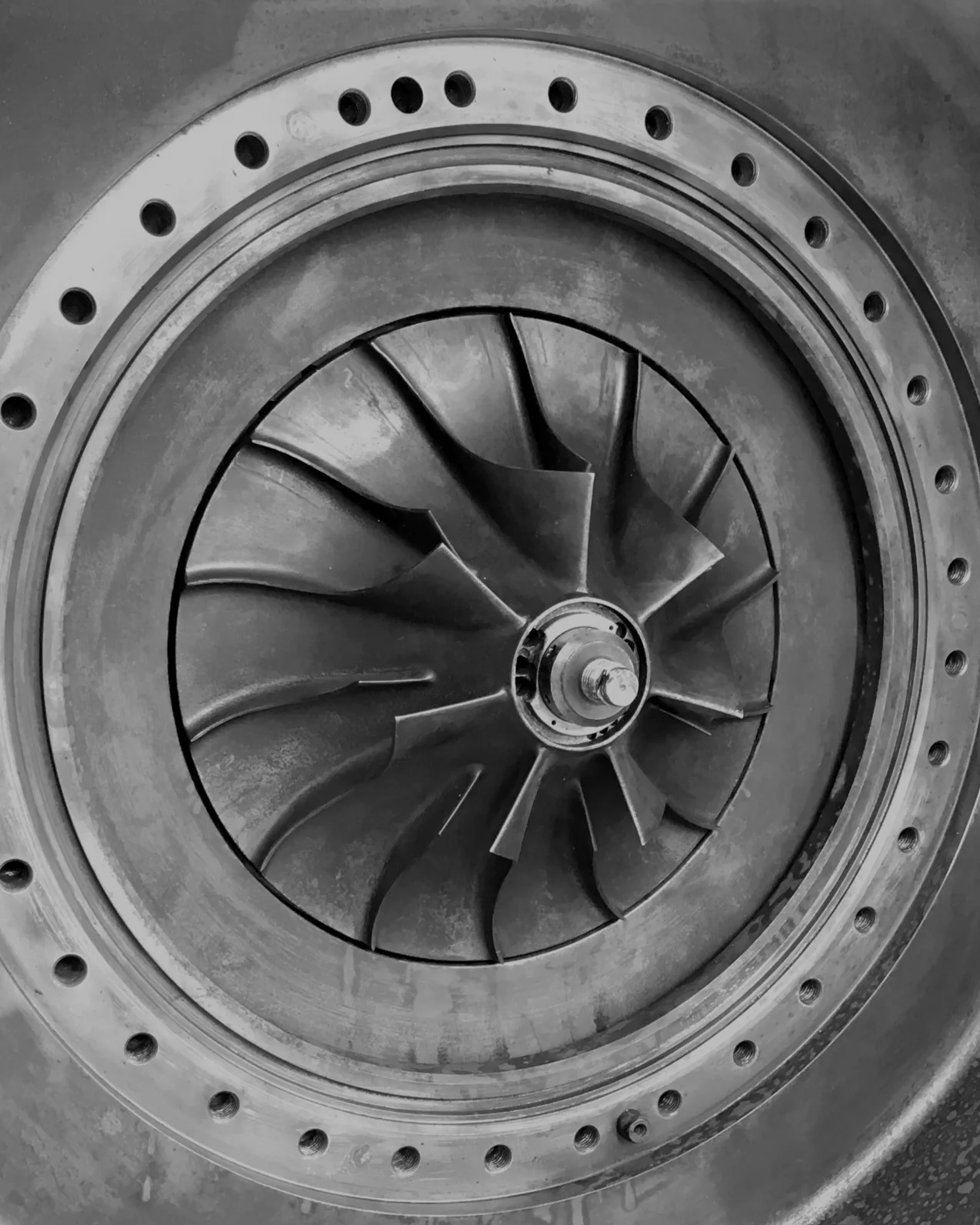
Heatlift high-performance centrifugal compressor impeller

Designed for intensive industrial processes

Heatlift high-temperature heat pumps (HTHP) cover a large range of process prower and temperature requirements meeting the needs of numerous industrial sectors.

Temperature versus power positioning for industrial sectors and Heatlift range A two-axis chart showing power on the horizontal axis and temperature on the vertical axis. Sector requirement blocks for food and beverages, paper pulp and wood, district heating, and chemicals and petrochemicals are shown, along with a highlighted Heatlift operating range. Hovering a sector or legend item highlights it. Food and beverages Power: 0.5–10 MWTemperature: 50–180°C Paper, pulp and wood Power: 1–15+ MWTemperature: 80–200°C District heating Power: 1–15+ MWTemperature: 50–130°C Chemicals Power: 3–15+ MWTemperature: 80–200+°C 2–15 MW · 100–200+°C Power: 2–15 MWTemperature: 100–200+°C 0246810121415+ 050100150200+ HEAT DUTY (MW) TEMPERATURE (°C)

Heatlift standard system

HL-SG6
Steam Generating Heat Pump

Heatlift developed the HL-SG6 to address a large share of industrial steam needs with a standardized, high-performance and integration-friendly solution.
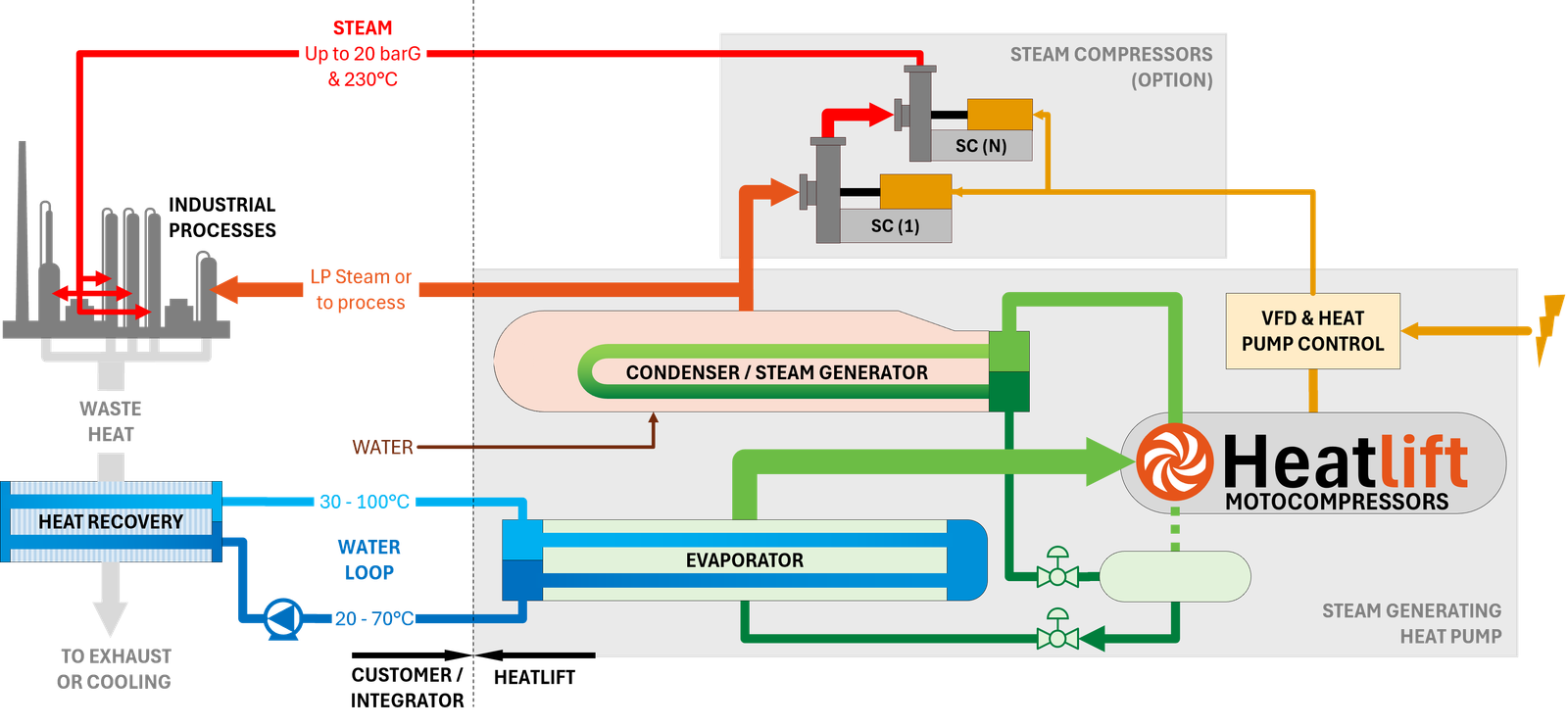
  • Direct steam generation for maximized COP
  • Two-stage centrifugal compression for high efficiency
  • Non-flammable working fluid with low GWP
  • Compact modular plant delivered in two preassembled containers
Heatlift SG6 cycle diagram
6 t/h Steam production
~4.0 MWth
7,500 tCO₂/year Saved per unit
Up to 10 barg Saturated or superheated steam
Up to 200°C
COP 2.8–3.1 Steam production at 70°C lift
Source inlet temperature
30 to 90°C
Working fluid
Non-flammable, low-GWP HFO
Alkanes (natural refrigerants)
Part load
Up to 50% turndown
Plant delivery
Two 40' containers
Start-up
Up to 10 minutes once the source is available

Simplified integration

Easy connection to heat pump containers and electrical/control panels for fast site installation.

Industrial flexibility

Designed to operate in parallel with existing utilities and adapt to a wide range of applications.

Designed for a combination with Steam Compressors

Can be completed with steam compressors (MVR) when the lift or process requires higher pressures.

Turn waste heat into value.

Share your heat source, target temperature and thermal demand. Our engineers will help identify the most relevant integration pathway for your industrial site.

Discuss your project